Sweden holidays
1 destination in Sweden, with real fares from London Heathrow. See Stockholm below, or plan dates in the trip search.
Highlights
Sweden's trip starts with Stockholm, a capital spread across fourteen islands where ferries are as normal a way to get around as the metro.
Why go
- A genuinely island-built city — Gamla Stan's old town, waterfront Djurgården and the rest of the centre are linked by bridges, metro and ferries rather than one continuous street grid.
- Museums here range from world-class (the Vasa Museum's intact 17th-century warship) to design- and food-led, most reachable on foot or by a short boat hop.
- The city's own archipelago starts a short ferry ride from the centre, so a genuine island day trip needs no long journey.
Worth knowing
- Stockholm is the only Swedish destination on this site for now — Gothenburg, the south and Swedish Lapland's own Arctic season aren't covered yet.
- The city's island layout means journeys that look short on a map can involve a bridge or ferry detour.
- Winter's reduced ferry frequency and short daylight make this more of an indoor city break than a boat-and-island one outside summer.
Stockholm
City · Sweden€89 from London Heathrow2h 25m, direct
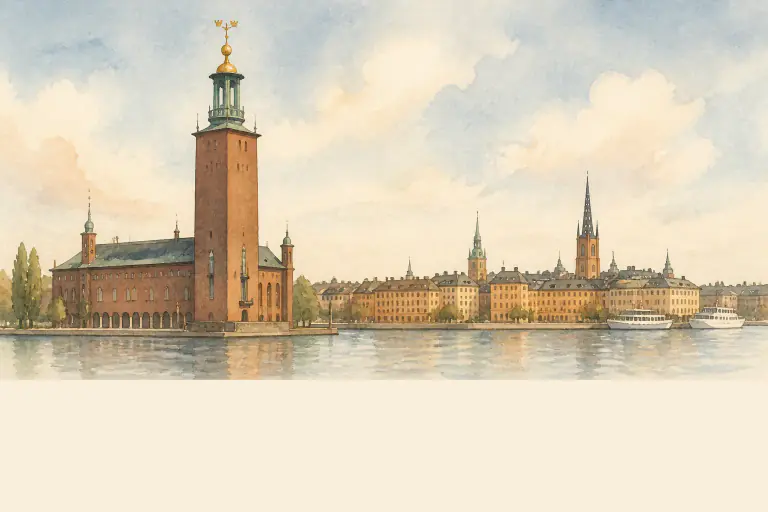
Fares are one-way prices from London Heathrow, per traveller, checked regularly against Travelpayouts — indicative, not live quotes. See the packages page for real return windows with dates.
When to go
- Spring
- Snow clears through April and days lengthen quickly, with waterfront paths and outdoor café terraces back in use by May.
- Summer
- Stockholm's brightest, busiest season, with light lingering past 10pm in June and archipelago ferries running full schedules. Also the most expensive and booked-up time to visit.
- Autumn
- Cooling and quieter from September, with archipelago boat timetables thinning out as the season winds down.
- Winter
- Daylight falls to only a few hours by December, sun up past 8am and down by mid-afternoon, and the water around the city can freeze at its edges, slowing some ferry routes. Stockholm compensates with a strong indoor season — museums, design shops and candlelit cafés — plus a Christmas market in Gamla Stan.
Weather across Sweden
Monthly highs and rainfall averaged across Sweden’s 1 published destination — one place inside that set can run warmer or cooler than this. Gold months are the best weather fit by our formula.
- Best overall
- May · June · July · August
- Hottest
- June · 22°C
- Wettest
- July · 95mm
- January, averaged across these destinations: daily high 1°C, 58mm rainfall.
- February, averaged across these destinations: daily high 2°C, 50mm rainfall.
- March, averaged across these destinations: daily high 6°C, 36mm rainfall.
- April, averaged across these destinations: daily high 9°C, 38mm rainfall.
- May, averaged across these destinations: daily high 17°C, 40mm rainfall. Good month for weather.
- June, averaged across these destinations: daily high 22°C, 65mm rainfall. Good month for weather.
- July, averaged across these destinations: daily high 21°C, 95mm rainfall. Good month for weather.
- August, averaged across these destinations: daily high 22°C, 81mm rainfall. Good month for weather.
- September, averaged across these destinations: daily high 17°C, 52mm rainfall.
- October, averaged across these destinations: daily high 11°C, 65mm rainfall.
- November, averaged across these destinations: daily high 5°C, 50mm rainfall.
- December, averaged across these destinations: daily high 1°C, 46mm rainfall.
What it costs
An inexpensive restaurant meal runs around €13. A budget hotel room is typically around €69/night, €107 mid-range. These are Sweden-wide estimates, not live listing prices.
Getting around
Stockholm Arlanda Airport sits well outside the city; the Arlanda Express runs non-stop to Central Station in around 18 minutes, while slower commuter trains cover the same route in about 38 minutes for less money. Inside Stockholm, the metro, trams, buses and city ferries work as one connected system, and a car is more hindrance than help across an island city.
Other countries
Show all 45 other countries
- Cyprus (no flight)
- Spain
- Greece
- Croatia
- Egypt
- Italy
- Portugal
- Malta
- Austria
- France
- Germany
- Romania
- Turkey
- United Kingdom
- Albania
- Armenia
- Belgium
- Bosnia and Herzegovina
- Bulgaria
- Czechia
- Denmark
- Estonia
- Finland
- Georgia
- Hungary
- Iceland
- Ireland
- Israel
- Jordan
- Latvia
- Lithuania
- Moldova
- Montenegro
- Morocco
- Netherlands
- North Macedonia
- Norway
- Poland
- Serbia
- Slovakia
- Slovenia
- Switzerland
- Tunisia
- United Arab Emirates
- United States