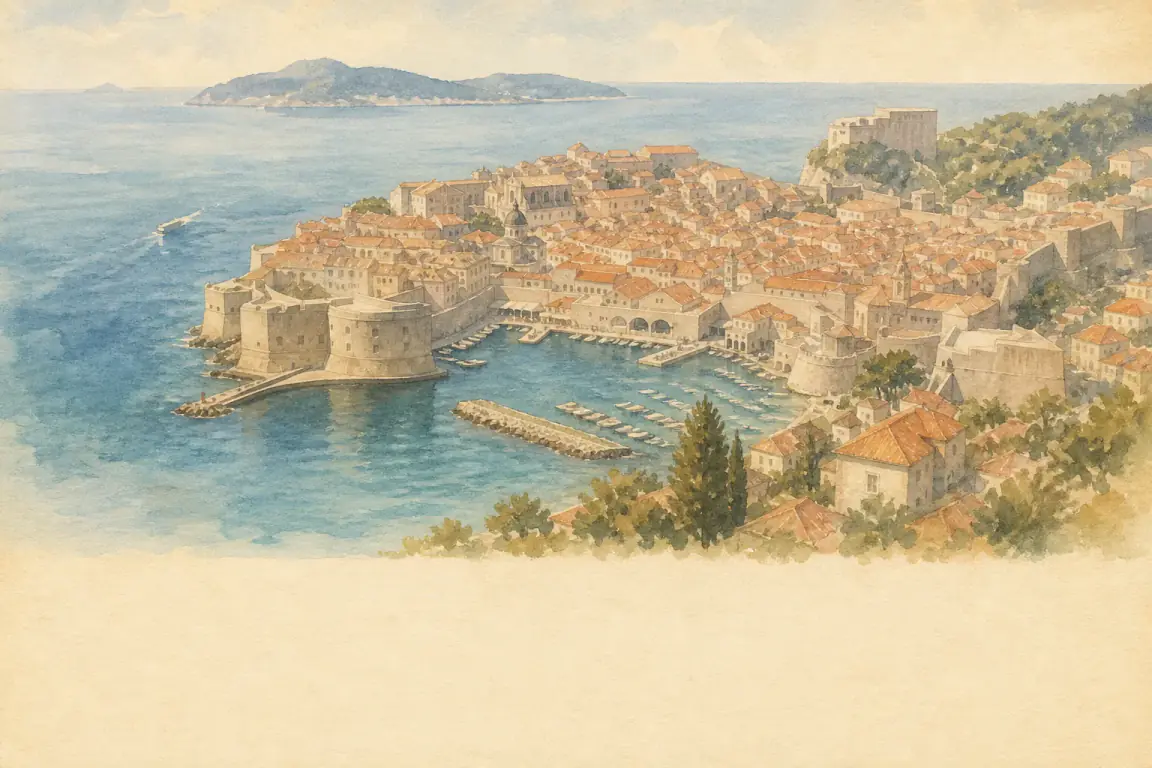
Dubrovnik holidays
Walled Adriatic base where steep stone streets meet cruise-heavy harbour and short hops to islands and coastal villages.
Prices on this page are shown from the UK. Change market
26°C SeptemberBest Jun, Jul, Aug, Sep3–5 nights
At a glance
- short coastal city breaks
- travellers mixing walls with island day trips
- families wanting resort areas near a historic centre
Trip cost
- Return flight
- ≈€69
- Stay
- ≈€440
- Food & local
- ≈€96
Includes the return fare from London Stansted. An estimate, not a quote — each booking happens separately with its supplier. How we work this out.
Prices shown on this page are indicative estimates in euros, not quotes. Every booking happens separately with its own supplier, at that supplier's own live price. How we work this out.
Stays
Stays in Dubrovnik
From €40/night · Typical €113 · 240 stays · 4-night stay assumed

- Best 3-starDubrovnik oasis967 m from the centre€150 a night (opens in a new tab)
See more 3-star options
- Best 4-starVilla Olivila6.5 km from the centre€458 a night (opens in a new tab)
See more 4-star options
- CheapestApartments ZanetićZaton HR · 6.5 km from the centre€40 a night (opens in a new tab)
See more options, cheapest first


Map
Review or change this anytime on our privacy page.
Self-catering
Prefer a place of your own? Browse holiday homes and apartments in Dubrovnik on Holidu.
Getting to Dubrovnik
- AirportDubrovnik Airport (DBV)
- Transfer optionsBus, taxi
Dubrovnik Airport lies about 22.5 km from the city, with the Platanus shuttle bus to Pile Gate and taxis or pre-booked transfers serving the Old Town and Lapad.
Indicative, per traveller. You book with Aviasales.
Areas of Dubrovnik
A few places people base themselves, and who each tends to suit.
- Old Town (inside the walls)Best for travellers prioritising historic atmosphere who are comfortable with stairs, luggage carry and no vehicle access.
- PileSuited to visitors wanting immediate access to the Old Town gates while staying just outside the walls for easier arrivals and departures.
- PločeAppeals to those seeking hillside sea views and a quieter feel east of the walls with easy access to Banje Beach.
- LapadGood for families and longer stays that prioritise beaches, flatter streets and mid-range prices over being beside the walls.
- Babin KukBest for resort-style hotel stays with coastal walks and family facilities, accepting the longer bus ride back to the Old Town.
Dubrovnik weather by month
Dubrovnik is warmest in July, when daily highs average 31°C, and coolest in January at 12°C. November is the wettest month at about 370 mm, July the driest at 42 mm. Taking warmth and rainfall together, June, July, August, September score best for a trip.
- Best overall
- June · July · August · September
- Hottest
- July · 31°C
- Wettest
- November · 370mm
- January: average daily high 12°C, 250mm rainfall.
- February: average daily high 13°C, 170mm rainfall.
- March: average daily high 14°C, 230mm rainfall.
- April: average daily high 17°C, 140mm rainfall.
- May: average daily high 22°C, 160mm rainfall.
- June: average daily high 28°C, 49mm rainfall. Good month for weather.
- July: average daily high 31°C, 42mm rainfall. Good month for weather.
- August: average daily high 30°C, 73mm rainfall. Good month for weather.
- September: average daily high 26°C, 157mm rainfall. Good month for weather.
- October: average daily high 21°C, 178mm rainfall.
- November: average daily high 17°C, 370mm rainfall.
- December: average daily high 14°C, 210mm rainfall.
How these figures are worked out
Monthly averages — multi-year historical data, not a standard 30-year climate normal or a forecast. Gold months are the best weather fit: each month scores on how close its average daily high sits to about 27 °C, with heavy rainfall counting against it, and months far outside that range are not ranked at all.
What each season is like
- Spring
- Cruise calls begin but crowds are lighter and coastal walks are easier without peak heat; some island services may still be ramping up.
- Summer
- Old Town lanes and viewpoints can feel packed, cruise schedules intensify and midday walking across stone streets becomes demanding.
- Autumn
- Early autumn keeps the sea usable with fewer visitors; later in the season some beach and boat operations wind down and weather becomes more changeable.
- Winter
- Outside holiday periods parts of the tourism economy pause, with fewer flights and more limited island connections, making the city feel quiet but also restricted.
What’s on in Dubrovnik
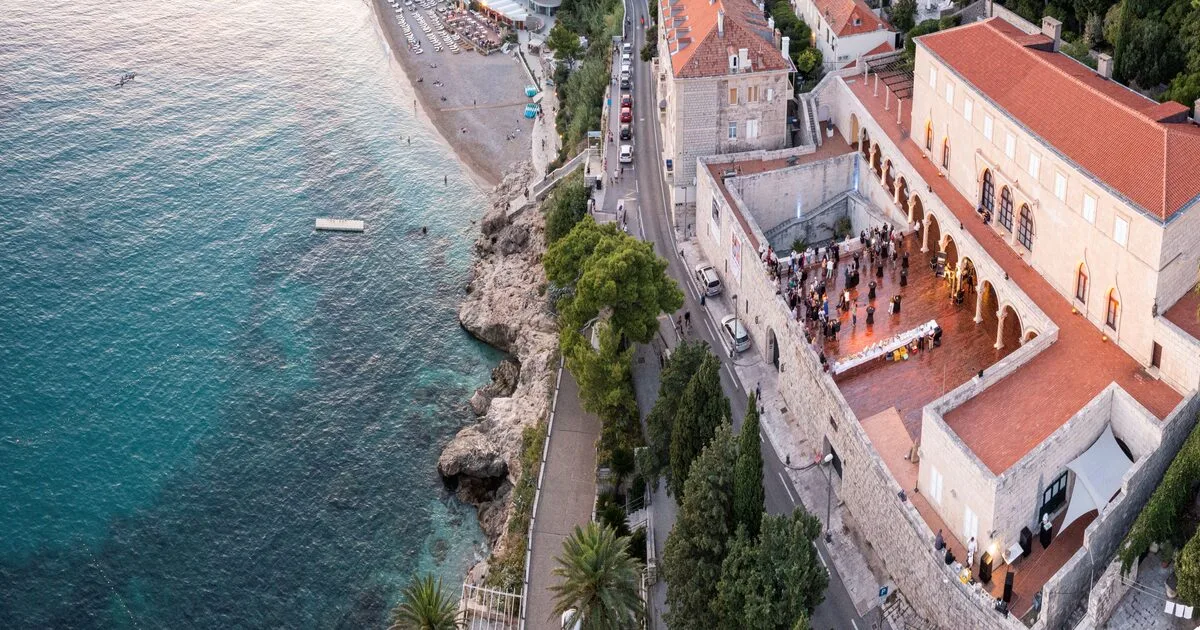
See all events in Dubrovnik on Wanderistan (opens in a new tab)
Compare Croatia destinations
Still deciding? Other Croatia destinations, with the same weather and typical-stay data behind them.
Nearby and alternative destinations
More from the UK
Good to know about Dubrovnik
Why go
- Gives direct access to a compact walled core unlike more spread-out Dalmatian cities such as Split.
- Better suited to combining city walls with nearby islands and south-coast villages than Pula or Zadar, which sit further from the island cluster.
- Lapad and Babin Kuk offer resort-style stays a bus ride from the walls, something you will not find in smaller coastal towns.
- The city walls run for 1,940 metres around the Old Town, with sixteen towers and three fortresses along the circuit. No reservation is needed: tickets are sold on site or in advance through the official webshop, and the walls open every day of the year except Christmas Day, with separate winter hours from November to March.
- Long-distance coaches link Dubrovnik with Sarajevo and with Montenegro, and in summer international ferries sail to Bari in Italy, alongside the regular boats to Split and the Dalmatian islands.
Worth knowing
- Steep stone streets, steps and car-free lanes make bags and mobility challenging, especially inside the walls.
- High visitor numbers and cruise traffic in summer can make the core feel crowded for much of the day.
- Accommodation inside the walls is expensive relative to neighbouring Croatian towns, pushing many travellers to Lapad or Babin Kuk for value.
- Island and coastal boat services are strongly seasonal, limiting options in winter and parts of shoulder seasons.
- Cruise ships frequently dock in Dubrovnik, and driving into the Old City is restricted: only drivers with prior registration, or with accommodation that includes parking, may enter its special traffic zone, and parking facilities are outside the centre.
Official references
Authoritative pages worth checking before you go to Dubrovnik.
- Dubrovnik City Walls visitor information (opens in a new tab) — Society of Friends of Dubrovnik Antiquities
- Dubrovnik heritage sites: tickets, opening days and winter hours (opens in a new tab) — Society of Friends of Dubrovnik Antiquities
- Getting around Dubrovnik, parking and the Old City traffic zone (opens in a new tab) — Dubrovnik Tourist Board
- Old City of Dubrovnik on the UNESCO World Heritage list (opens in a new tab) — UNESCO World Heritage Centre