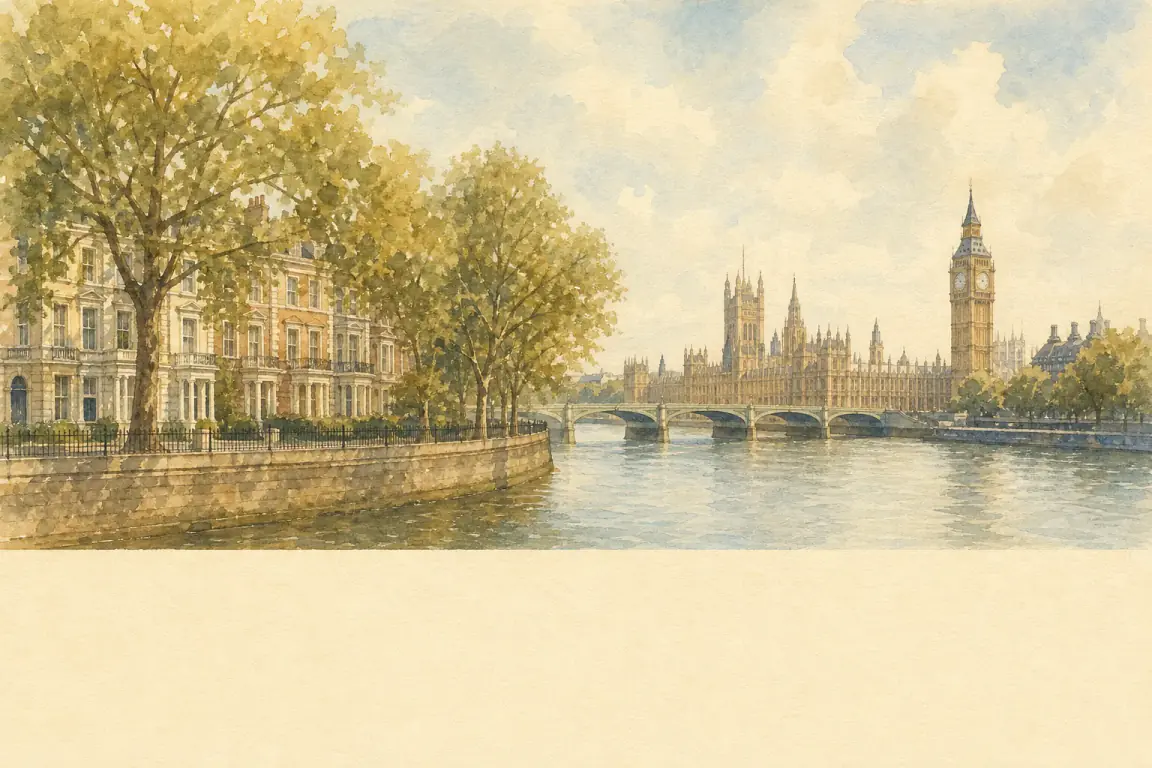
London breaks
A major world capital where West End theatre, historic districts and varied neighbourhoods cluster along the Thames.
20°C SeptemberBest Jun, Jul, Aug, Sep3–7 nights
At a glance
- first-time visitors
- urban explorers who enjoy changing neighbourhoods
- English-speaking city break
- multi-day base with day trips
Trip cost
- Stay
- ≈€552
- Food & local
- ≈€150
An estimate, not a quote — each booking happens separately with its supplier. How we work this out.
Prices shown on this page are indicative estimates in euros, not quotes. Every booking happens separately with its own supplier, at that supplier's own live price. How we work this out.
Stays
Stays in London
Typically around €75/night, a United Kingdom-wide estimate · €138 mid-range — not a live listing price
Map
Review or change this anytime on our privacy page.
Self-catering
Prefer a place of your own? Browse holiday homes and apartments in London on Holidu.
Getting to London
- AirportLondon Heathrow Airport (LHR)
- Transfer optionsTrain, metro, bus, coach, taxi
Heathrow lies about 32 km west of central London, with rail services, the Underground, express coaches and taxis providing access to the city; most visitors use public transport when arriving in daytime, with taxis or night buses as fallbacks for very late arrivals.
Areas of London
A few places people base themselves, and who each tends to suit.
- Covent GardenCentral, walkable base close to theatres and major sights, suits first-time visitors who want everything on the doorstep.
- South KensingtonUpscale, residential area near major museums and parks, good for families and travellers wanting a quieter but refined base.
- ShoreditchEast London district with strong nightlife and food scene, suits younger visitors and those prioritising bars, markets and creative culture.
- BloomsburyCentral yet calmer neighbourhood with garden squares and a local feel, suited to returning visitors and anyone wanting a more residential atmosphere close to the West End.
- Earl's CourtFurther from the very centre but on key Tube lines, useful for budget-conscious travellers seeking a more everyday London environment.
London weather by month
London is warmest in July, when daily highs average 23°C, and coolest in January at 7°C. October is the wettest month at about 87 mm, April the driest at 39 mm. Taking warmth and rainfall together, June, July, August, September score best for a trip.
- Best overall
- June · July · August · September
- Hottest
- July · 23°C
- Wettest
- October · 87mm
- January: average daily high 7°C, 69mm rainfall.
- February: average daily high 10°C, 54mm rainfall.
- March: average daily high 12°C, 54mm rainfall.
- April: average daily high 14°C, 39mm rainfall.
- May: average daily high 18°C, 63mm rainfall.
- June: average daily high 22°C, 53mm rainfall. Good month for weather.
- July: average daily high 23°C, 70mm rainfall. Good month for weather.
- August: average daily high 23°C, 40mm rainfall. Good month for weather.
- September: average daily high 20°C, 77mm rainfall. Good month for weather.
- October: average daily high 16°C, 87mm rainfall.
- November: average daily high 11°C, 76mm rainfall.
- December: average daily high 9°C, 64mm rainfall.
How these figures are worked out
Monthly averages — multi-year historical data, not a standard 30-year climate normal or a forecast. Gold months are the best weather fit: each month scores on how close its average daily high sits to about 27 °C, with heavy rainfall counting against it, and months far outside that range are not ranked at all.
What each season is like
- Spring
- Spring shoulder season brings blooming parks and generally manageable crowds, but Easter and May bank holidays, the London Marathon and other events can make some weekends busy and cause transport disruptions.
- Summer
- Summer offers long days and many outdoor events yet is peak tourist season, with large queues at major sites, crowded public transport and school-holiday traffic, especially in July and August and around festivals such as Notting Hill Carnival.
- Autumn
- Autumn shoulder months, particularly September and October, balance still-pleasant conditions with fewer visitors; you sidestep the worst summer crowding but should watch for school half-term weeks and a busy cultural programme that concentrates demand on certain dates.
- Winter
- Winter brings the lowest general visitor numbers outside the Christmas to New Year period, with shorter days and more indoor-focused trips; festive markets and light displays increase crowds from late November, while January and February can feel quieter but some outdoor-oriented experiences are less appealing and opening hours may be reduced.
What’s on in London

See all events in London on Wanderistan (opens in a new tab)
Compare United Kingdom destinations
Still deciding? Other United Kingdom destinations, with the same weather and typical-stay data behind them.
| Destination | Aug | Typical stay |
|---|---|---|
| Edinburgh | 19°C | 2–4 nights |
Nearby and alternative destinations
Nearby — reachable overland
- Paris~343km straight-lineexpect a border check
Good to know about London
Why go
- Compact central districts let you experience very different neighbourhood styles without changing cities, from Covent Garden to Shoreditch.
- Year-round theatre and event calendar means almost any month offers significant performances and citywide occasions.
- Public transport links tie airports and outer boroughs into the centre, so you can stay in the area that suits your style.
Worth knowing
- Accommodation and transport costs are relatively high compared with many destinations, especially in peak summer and around major holidays such as Christmas and New Year.
- Central areas and public transport can feel intensely crowded during summer, Easter week and the festive season, which may not suit travellers seeking a quieter break.
- The city is geographically large and many points of interest sit in different clusters, so crossing town to change neighbourhoods can be time-consuming compared with more compact capitals.